
Roof Costs Up, Claims Down: What's Going On?
The numbers don't add up—here's why contractors are charging more anyway.
The Ridge Insights
Welcome to The Ridge Insights!
Replacement costs jumped 33% last year while you were probably still quoting off last season’s numbers — here’s what that gap is costing you and how to close it.
What’s in this issue:
- 💰 Why your estimates from 18 months ago are leaving serious money on the table
- 📊 The regional roof age gap that’s creating opportunity in some markets and chaos in others
- 🔧 What 38% of homes in poor roof condition means for your pipeline
- 📈 How to update your pricing systems before the next hail season hits
💡 Quote of the Day
“The gap between what it cost to roof a house last year and what it costs today isn’t just inflation — it’s the difference between a profitable job and one that eats your margin alive.”
— Shareef Huddle, Founder of Huddle Web Works
📰 Latest News
🔗 Roof Costs Soar Even as Claims Decline: Verisk (6 minute read)
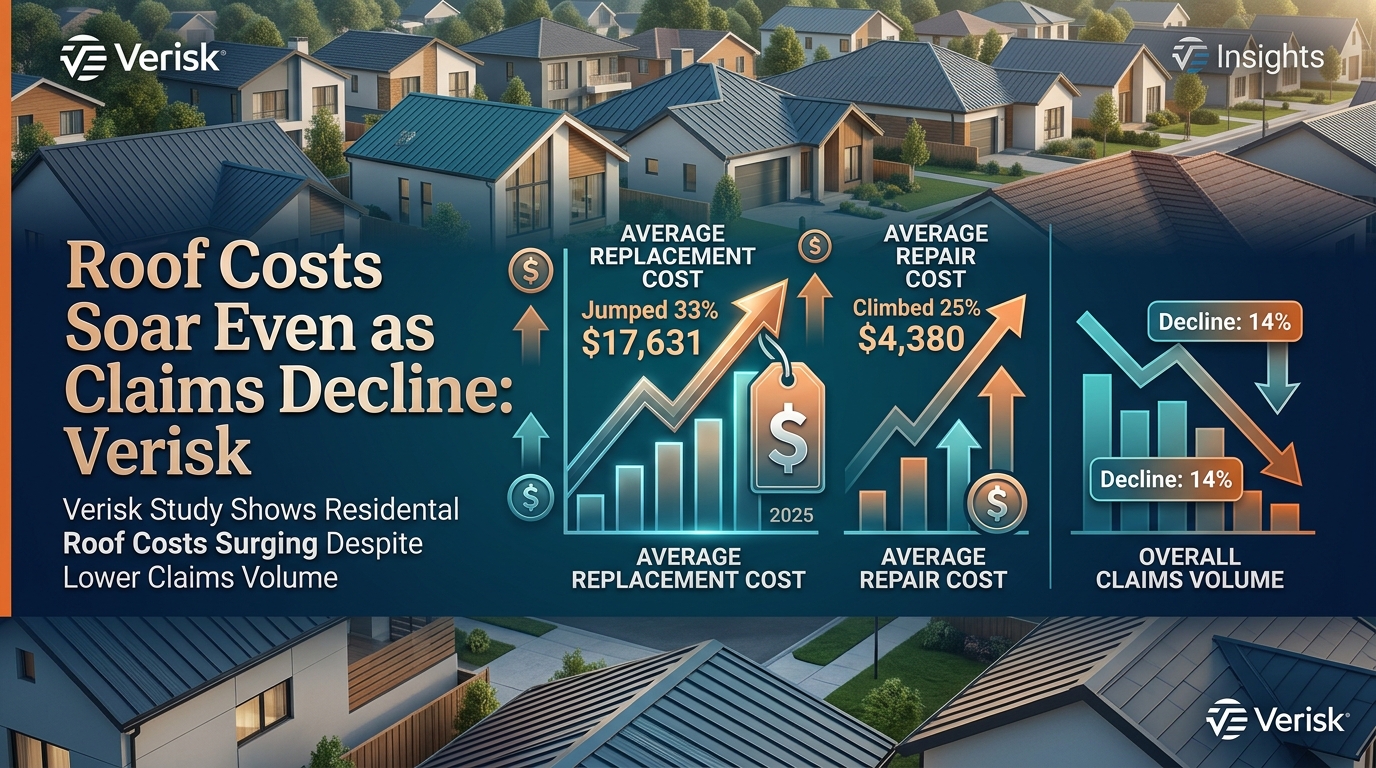
Residential roof replacement costs jumped 33% to an average of $17,631 in 2025, while repair costs climbed 25% to $4,699, according to new data from Verisk. This surge is happening even as overall claims volume is declining — a pattern driven by hail volatility, aging roof stock, and material cost inflation that’s outpacing labor increases. The study reveals that 38% of U.S. homes are showing moderate to poor roof condition, with sixteen states experiencing severe hail impacts on over 20% of roofs.
Key Points:
- Average roof replacement costs increased 33% to $17,631, with repairs up 25% to $4,699 in 2025
- Regional variations are dramatic: the South has 28% of roofs under 4 years old, while the Midwest and Northeast show 17-18% of roofs over 31 years old
- Material costs are rising faster than labor, with significant state-by-state pricing swings creating estimation challenges
- 38% of homes nationwide show moderate to poor roof condition, representing massive replacement demand
Why it matters: If you’re still using pricing from 18 months ago, you’re leaving thousands of dollars on the table per job — or worse, winning bids that lose money when materials hit the yard. This isn’t just about raising prices; it’s about having systems that keep your estimates current with actual replacement costs, document supplements properly for insurance claims, and maintain markup discipline when costs are moving this fast. The regional variations also point to where opportunity lives: aging roof stock in the Midwest and Northeast means replacement demand, while the South’s newer roofs suggest storm-driven repair work. Your estimating software, insurance claim workflows, and pricing strategy all need to reflect these realities, or you’re operating on outdated assumptions in a market that moved without you.
🔥 Trending
-
Material Cost Tracking Systems: With 33% cost increases in a single year, contractors are implementing real-time material cost tracking in their estimating software to prevent pricing gaps
-
Insurance Supplement Documentation: As replacement costs surge, proper supplement documentation is becoming critical to recover actual costs on insurance claims
-
Regional Market Targeting: Smart contractors are using aging roof stock data to target Midwest and Northeast markets where 17-18% of roofs are over 31 years old
-
Dynamic Pricing Models: Moving away from static price books toward systems that adjust for current material costs and regional variations
⚡ Quick Hits
🎯 Hail Impact Zones Expanding
Sixteen states now show severe hail impacts on over 20% of roofs, creating concentrated demand in specific markets. If you’re not tracking hail patterns in your service area, you’re missing predictable spikes in replacement work. (Read more)
🎯 South vs. North Roof Age Gap
The South has 28% of roofs under 4 years old compared to just 17-18% in the Midwest and Northeast with roofs over 31 years. This age gap defines where storm work dominates versus where replacement cycles are driving demand. (Read more)
🎯 Material Inflation Outpacing Labor
Material costs are rising faster than labor rates, creating a specific challenge: your crew costs might be stable, but your shingle and underlayment costs are not. This requires separating material and labor markup strategies. (Read more)
🎓 Industry Insight
Closing the Pricing Gap: Systems That Keep Estimates Current
A 33% cost increase in one year doesn’t just mean you need to charge more — it means your entire pricing system needs to operate differently. Static price books and historical job costs are now liabilities. When replacement costs move this fast, the gap between your estimate and your actual material invoice becomes a direct hit to margin.
The fix isn’t complicated, but it requires discipline. First, your estimating software needs to pull current material costs, not averages from last season. Second, your markup strategy needs to separate material and labor — when material costs are volatile, a flat percentage markup on both creates exposure. Third, your insurance claim workflow needs tighter supplement documentation because Xactimate pricing often lags real-world costs, and you need the backup to justify the difference.
Here’s what this looks like in practice: before you send an estimate, you verify current shingle and underlayment costs with your supplier. You apply markup to labor based on crew efficiency and overhead, but you apply markup to materials based on current replacement cost plus a buffer for volatility. And when you’re working an insurance claim, you document every cost difference between the adjuster’s initial estimate and your actual replacement cost — because that 33% gap is real money, and it’s your job to recover it.
❓ Question of the Day
How often do you update material costs in your estimating system?
- A) Every job based on current supplier pricing
- B) Monthly or quarterly updates
- C) Once or twice a year
- D) We use historical averages
👋 Wrap Up
Today’s data makes one thing clear: the pricing assumptions you had 18 months ago are costing you money right now. A 33% jump in replacement costs isn’t background noise — it’s a fundamental shift in how you need to estimate, price, and document insurance claims.
The opportunity is in the system. Contractors who update material costs in real time, separate material and labor markup strategies, and document supplements properly are capturing margin that others are leaving on the table. The aging roof stock in the Midwest and Northeast, the hail volatility in sixteen states, and the regional pricing swings all point to the same thing: you need systems that adapt as fast as the market moves.
Stay sharp out there,
Shareef Huddle
📊 How did you like today’s email?
Enjoyed this issue?
Subscribe to get The Ridge Insights delivered to your inbox every week.
Join 95 other subscribers • Free forever