
Ridge Insights: PE Capital Surge Could Cut Your Margins 15%—Here's Your Playbook
Private equity is reshaping the roofing industry—here's what it means for you
The Ridge Insights
Welcome to The Ridge Insights!
Capital is flooding into roofing—PE deals, distributor consolidation, and trade school investment are reshaping the competitive landscape. This week we decode what buyers are paying for, where the labor pipeline is headed, and which adjacent revenue streams you’re leaving on the table.
What’s in this issue:
- 💰 Private equity recapitalizes two roofing companies—what 100% retail cash-pay revenue really means for your valuation
- 🔨 Trade school revenue jumps 11.4% as $600M+ in corporate funding targets the labor shortage
- ☀️ 3.3 million homes need new roofs annually—and represent 30 GW of untapped solar capacity
- 📊 Commercial flat roof repair pricing intelligence and what it means for your estimating discipline
- 🏢 Distributor power dynamics shift as MARS hires Beacon’s $1.9B procurement VP
💡 Quote of the Day
“The difference between a good summer and a great one is almost never the weather. It’s capital.”
— Steven Edisis, Founder & CEO, Dynamic Capital
📰 Latest News
🔗 Awani Capital Recapitalizes Two Roofing Companies to Form Premium Retail Platform (3 minute read)

Awani Capital Management just recapitalized NewHaus Construction and Universal Roofing & Construction to create a premier residential roofing platform serving California and Texas. The combined company operates out of Los Angeles County with a 100% retail, cash-pay revenue model—no insurance work, no storm chasing, just white-glove repair and replacement across LA, Bay Area, San Diego, Dallas, and Houston. Ninety percent of revenue comes from roofing, with ancillary services filling out the rest.
Key Points:
- 100% retail cash-pay revenue model positions the platform at the premium end of valuation multiples
- Geographic footprint spans California and Texas markets with aging housing stock driving replacement demand
- White-glove service positioning and operational excellence are the core value drivers Awani is betting on for national expansion
Why it matters: This deal tells you exactly what private equity sees in roofing right now—predictable cash-pay revenue, premium positioning, and scalable operations in high-demand markets. If you’re running a retail-focused shop with strong margins and documented systems, you’re sitting on an asset class that’s getting multiple bids. If you’re competing against PE-backed platforms, you need to understand what they can afford to pay for customer acquisition and how they’ll use capital to out-spend you on marketing and talent. The 100% retail model also signals that insurance claim volatility and supplement negotiation headaches are valuation killers—clean revenue commands premium multiples.
🔗 FirstRidge Names Beacon VP as Chief Revenue Officer in Eighth Acquisition Since 2023 (4 minute read)
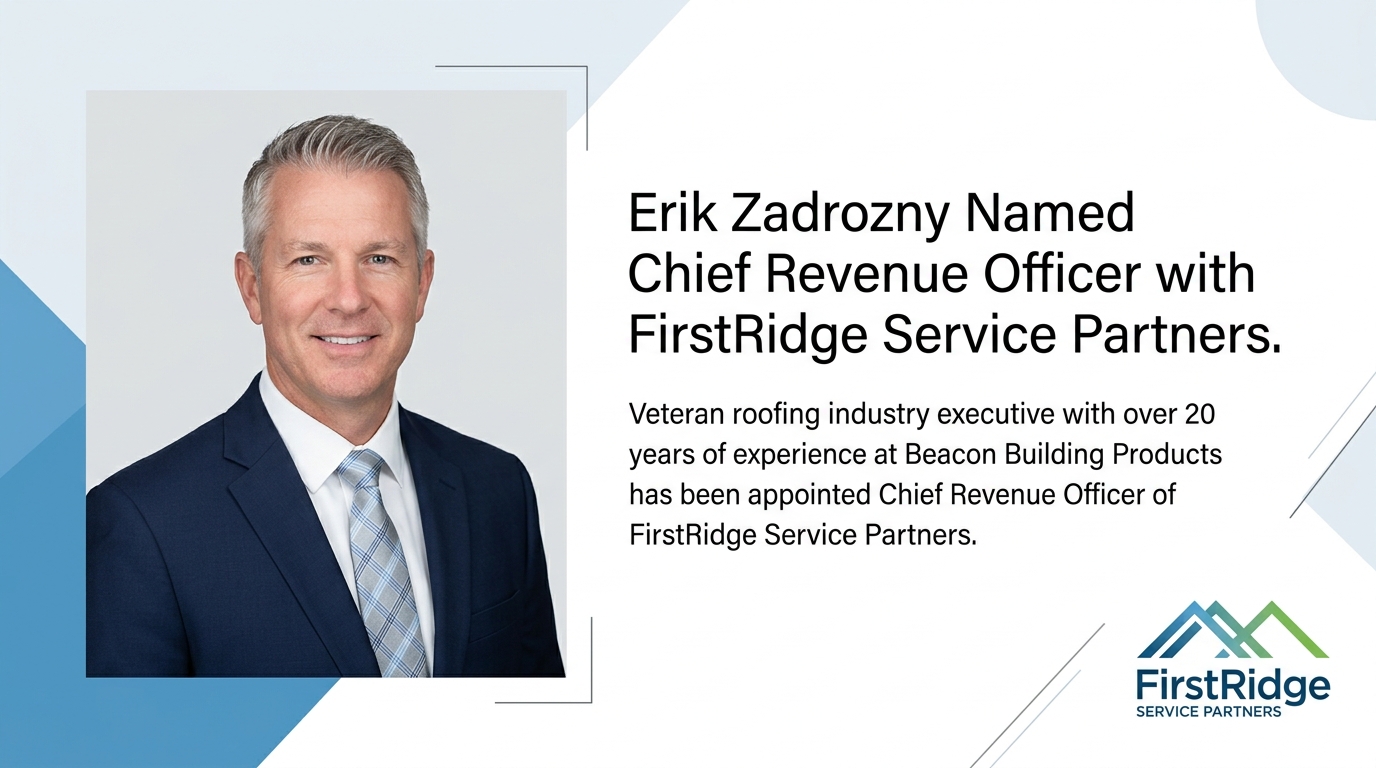
FirstRidge Service Partners, backed by Garnett Station Partners, just hired Erik Zadrozny as Chief Revenue Officer—a 20-year Beacon Building Products veteran who most recently ran $1.9 billion in commercial procurement as VP of Category Management. Zadrozny joins CEO Seth Wartak and CFO Mark DuRei as FirstRidge closes its eighth roofing brand acquisition since 2023, bringing Weddle & Sons into the fold and expanding operations into 11 states across the Midwest and Mountain West.
Key Points:
- FirstRidge has acquired eight roofing brands in three years, signaling aggressive PE-backed roll-up strategy
- Zadrozny’s $1.9B procurement background means FirstRidge will have material cost advantages and distributor leverage independents can’t match
- The platform model preserves local contractor branding while centralizing back-office, purchasing, and capital access
Why it matters: Consolidation isn’t coming—it’s here, and it’s accelerating. When a PE-backed platform hires the guy who controlled $1.9 billion in roofing material spend at Beacon, that’s not a talent acquisition—that’s a competitive weapon. Zadrozny will negotiate pricing, terms, and rebates that independent contractors can’t access, and he’ll use that margin advantage to fund customer acquisition and crew wages. If you’re competing in FirstRidge’s footprint, you need to know where your cost structure is vulnerable and whether your supplier relationships can deliver the pricing leverage to stay competitive. If you’re considering an exit, this is the buyer profile that’s writing checks right now—and they’re paying for EBITDA, systems, and local brand equity, not just revenue.
🔗 3.3 Million Homes Need New Roofs Annually—Representing 30 GW of Solar Capacity Opportunity (6 minute read)
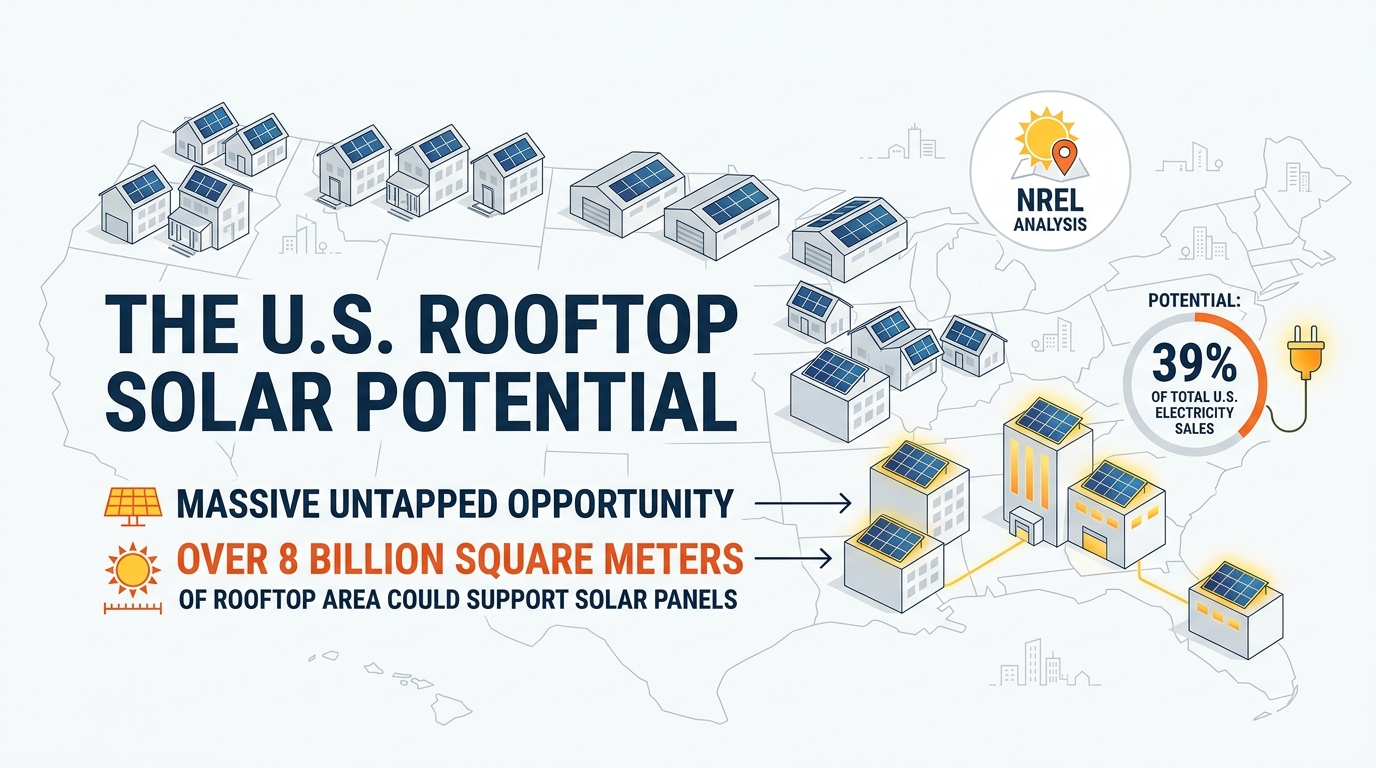
The U.S. has over 8 billion square meters of rooftop space suitable for solar panels—more than 1 terawatt of capacity—and 65% of that potential sits on residential rooftops. According to NREL analysis, 3.3 million homes need new roofs every year, creating 30 gigawatts of annual solar installation opportunity. The Department of Energy supports multiple tools like EnergySage, PVWatts, and Sun Number to help homeowners assess solar feasibility and connect with installers, democratizing solar adoption and making the convergence between roofing and solar inevitable.
Key Points:
- 3.3 million annual roof replacements represent a $30B+ solar opportunity hiding in your existing pipeline
- 42% of residential solar potential is in low-to-moderate income households, where financing and federal incentives make solar pencil out
- DOE-backed tools make solar feasibility assessments accessible, lowering the barrier for homeowners to request solar during roof replacement
Why it matters: If you’re replacing roofs and not offering solar as an upsell or partnership option, you’re leaving revenue on the table—and worse, you’re training your customers to call someone else for the next project. The solar-roofing convergence is no longer a future trend; it’s a current competitive advantage. You don’t need to become a solar expert or carry inventory—you need a partnership model with a licensed solar installer, a referral fee structure, or a joint proposal process that captures the customer at the point of maximum intent. The 30 GW annual opportunity is real, and it’s being monetized by someone. Make sure it’s you.
🔥 Trending
-
Trade School Revenue Climbs to $19.1 Billion: U.S. trade schools posted 11.4% year-over-year revenue growth in 2025, with major operators like Universal Technical Institute and Lincoln Tech beating forecasts by 100%+. BlackRock, Google, and Lowe’s have collectively pledged over $600 million to skilled trades training initiatives, signaling that the labor pipeline is finally getting funded—but the timeline matters for your 2026 hiring strategy.
-
Mid-Atlantic Roofing Supply Hires Beacon’s $1.9B Procurement VP: Stewart Staples, who oversaw $1.9 billion in commercial procurement at Beacon, joins MARS as VP of Commercial Roofing. This is the second major distributor hire this week, signaling that supply chain consolidation is accelerating and distributor power dynamics are shifting in ways that affect your pricing leverage and credit terms.
-
Air Force Awards $450M Roofing Services Contract: The Department of Defense awarded $450 million for roofing services at Air Force installations nationwide, demonstrating the scale of government and commercial roofing opportunity for contractors with bonding capacity and compliance systems in place.
⚡ Quick Hits
🎯 Home Depot vs. Lowe’s: SRS and Foundation Building Materials Acquisitions Reshape Pro Contractor Strategy
Home Depot’s $18.25B acquisition of SRS Distribution and Lowe’s purchase of Foundation Building Materials are reshaping the pro contractor landscape. Home Depot posted $164.7B in FY2025 revenue while Lowe’s hit $86.3B, but Lowe’s is targeting larger professional customers more aggressively. Valuation metrics favor Lowe’s (17.1x forward P/E vs. 21.7x for HD), and analysts project Lowe’s 8% sales growth in 2026 will outpace Home Depot’s 4%. For roofing contractors, this means evolving account terms, pricing power shifts, and the need to diversify supplier relationships to maintain negotiating leverage. (Read more)
🎯 Commercial Flat Roof Repair Cost Breakdown: Pricing Framework for Estimating Discipline
Hayden Humphrey of Capitol Roofing breaks down the key variables driving commercial flat roof repair costs in Cheyenne, Wyoming: membrane type (TPO, EPDM, PVC, modified bitumen), damage extent, accessibility, square footage, and drainage issues. Early intervention and proper drainage maintenance reduce costs and extend roof lifespan, but professional inspections are essential for accurate evaluation. The pricing framework here is directly applicable to residential estimating discipline—understanding damage variables, material selection impact, and markup justification. (Read more)
🎯 Philadelphia Roofing Replacement Costs Range $6,300 to $10,900
Philadelphia’s harsh climate, historic rowhouses, and flat-roof prevalence create unique roofing challenges—and pricing benchmarks. Typical replacement costs range from $6,300 to $10,900 depending on roof type and size. Key selection criteria include Pennsylvania licensing, insurance verification, written warranties, and local references. Window World of Philadelphia stands out for transparent pricing and lifetime warranty protection. For contractors in similar urban markets with historic housing stock, this provides market intelligence on pricing ranges and warranty positioning. (Read more)
🎓 Industry Insight
The Labor Pipeline Is Getting Funded—But the Timeline Matters for Your 2026 Strategy
Trade school revenue jumped 11.4% to $19.1 billion in 2025, and major corporations have pledged over $600 million to skilled trades training in recent months. Universal Technical Institute and Lincoln Tech posted 14% and 20% revenue growth respectively, crushing initial forecasts of 6-9%. This is real money flowing into the labor pipeline—but it’s not solving your crew shortage this summer.
Here’s what matters: the lag time between trade school enrollment and job-ready roofers is 6-18 months depending on the program. The funding announcements you’re seeing today will start producing qualified candidates in late 2026 and into 2027. That means your 2026 hiring strategy still needs to focus on retention, wage competitiveness, and subcontractor relationships—not waiting for the trade school pipeline to fill your truck.
The second-order effect is wage pressure. When BlackRock, Google, and Lowe’s dump $600M+ into training programs, they’re signaling to the market that skilled trades are undervalued. That capital will eventually push wages up across the board as newly trained workers enter the market with higher salary expectations and better negotiating leverage. If you’re not planning for 10-15% wage inflation over the next 24 months, you’re going to lose your best people to better-capitalized competitors.
The play here is twofold: First, double down on retention and apprenticeship programs internally so you’re not dependent on the external labor market. Second, build relationships with trade schools now so you’re first in line when graduates hit the market in 2027. The labor shortage is getting funded, but it’s not getting solved overnight—and the contractors who understand the timeline will win the talent war.
❓ Question of the Day
What’s your biggest competitive concern in the next 12 months?
- A) PE-backed platforms with capital advantages
- B) Labor shortage and wage pressure
- C) Material cost inflation and supplier leverage
- D) Insurance claim volatility and supplement negotiation
👋 Wrap Up
Roofing is professionalizing fast. Private equity is writing checks for retail cash-pay platforms. Distributors are consolidating and hiring procurement executives with billion-dollar buying power. Trade schools are getting funded, but the labor pipeline won’t fill your trucks until 2027. And 3.3 million homeowners are replacing roofs every year without anyone offering them solar.
The through-line here is simple: operators need financial discipline, strategic positioning, and operational systems to compete—or exit profitably. The capital is here. The question is whether you’re building a company that can compete against it or one that’s positioned to sell into it.
Stay sharp,
Shareef Huddle
📊 How did you like today’s email?
Enjoyed this issue?
Subscribe to get The Ridge Insights delivered to your inbox every week.
Join 95 other subscribers • Free forever