
Ridge Insights: Claim Your Share of 4-6% Market Growth (Before Competitors Do)
Discover the 3 strategies roofing leaders are using to capture market share in this growth window
The Ridge Insights
Welcome to The Ridge Insights!
Material costs are moving fast, AI is handling your phones, and private equity is writing checks. Here’s what you need to know this week to protect your margins and scale your business.
What’s in this issue:
- 💰 MDI prices just spiked 73%—what it means for your estimates and margins
- 🤖 How AI receptionists and fractional sales teams cut overhead while capturing more revenue
- 📊 What PE buyers actually value when they write the check (and what that means for you)
- 🎯 Material cost volatility is the new normal—here’s how to price accordingly
- 🔧 Why the best operators focus inward, not on competitors
💡 Quote of the Day
“I do mind [competition]. I just don’t focus on it. I focus on perfecting our product and understanding our customers.”
— Melisa Tokmak, Founder & CEO, Netic
📰 Latest News
🔗 73% MDI Price Spike Hammers Commercial Roofing Margins—Here’s What Contractors Need to Know (10 minute read)
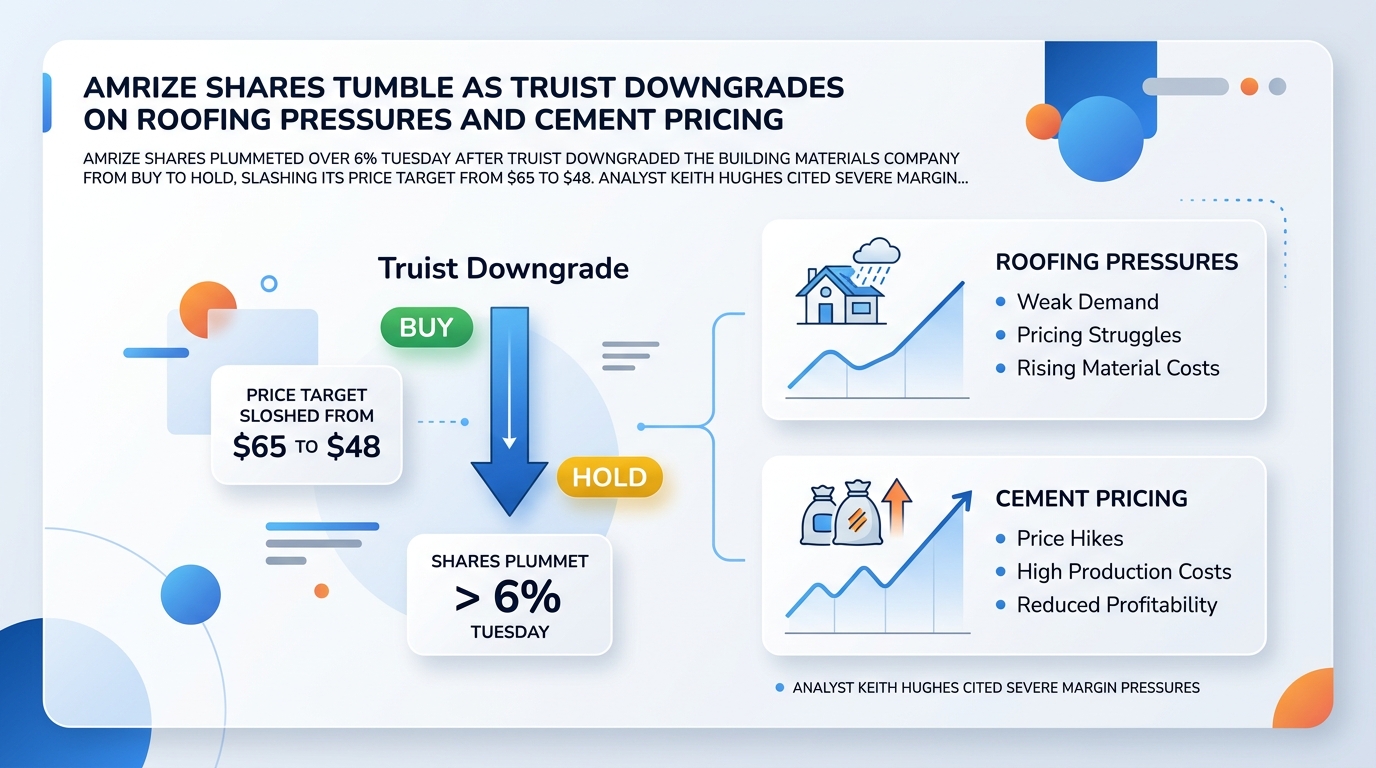
Amrize shares dropped over 6% this week after Truist downgraded the building materials giant, citing a 73% surge in MDI prices following Iran conflict-related petrochemical disruptions. MDI (methylene diphenyl diisocyanate) is a critical component in polyurethane foam insulation, spray foam roofing systems, and high-performance underlayment—materials that touch residential contractors even if they don’t realize it. The commercial roofing segment, which represents 28% of Amrize’s sales, is seeing severe margin compression as material costs spike faster than contractors can adjust pricing.
Key Points:
- MDI prices surged 73% due to petrochemical supply disruptions tied to Middle East conflicts
- Commercial roofing margins are under severe pressure as price increases lag behind cost inflation
- Truist cut 2026 EBITDA estimates by $99 million, signaling prolonged cost pressure through next year
- New competitive capacity from Kingspan entering the U.S. market adds pricing pressure on top of cost inflation
Why it matters: This isn’t just a commercial roofing problem—it’s an early warning for residential contractors. When upstream petrochemical costs spike, the entire supply chain feels it within 60-90 days. If you’re quoting jobs with material costs locked in from 30+ days ago, you’re leaving money on the table or worse, losing it on every job. Update your estimates frequently, build buffer into material pricing, and communicate proactively with customers about cost volatility. The days of stable material pricing are over.
🔗 Fractional Sales Teams: The $4,500/Month Solution to Owner Dependency (4 minute read)
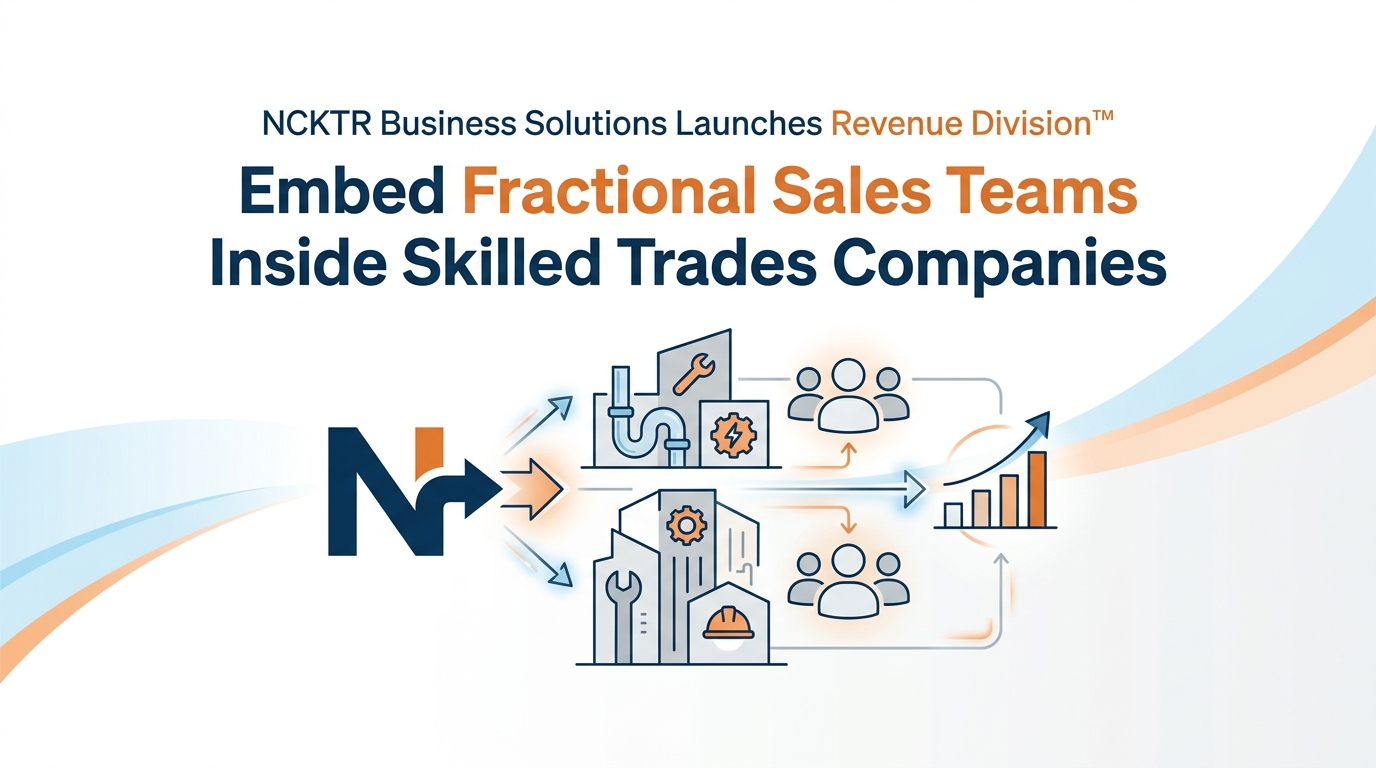
NCKTR Business Solutions just launched Revenue Division™, a service that embeds fractional sales teams directly inside skilled trades companies under the client’s brand. For roofing contractors, this addresses a critical growth ceiling: most owners are their own best salesperson, which caps revenue at the owner’s personal capacity. Revenue Division deploys Sales Development Representatives and Account Executives with proprietary frameworks, legal documentation, and performance accountability—standards rarely seen in trades consulting.
Key Points:
- Setup investment starts at $10,000 with monthly retainers from $4,500—significantly less than a full-time sales hire with benefits
- Service includes systematized lead conversion, pipeline management, and CRM integration to reduce owner dependency
- Already serving HVAC, plumbing, roofing, and electrical businesses across the trades
- Focuses on converting leads already in the pipeline, not just generating new ones
Why it matters: The math is straightforward. A full-time experienced sales rep costs $80K-$120K all-in (salary, benefits, vehicle, phone, CRM seat). A fractional SDR + AE combo at $4,500/month is $54K annually with no benefits overhead, and you’re buying proven systems, not training someone from scratch. If you’re the bottleneck in your sales process—if estimates sit in your inbox, if follow-up calls don’t happen unless you make them—this is the model to watch. It’s not about replacing yourself; it’s about building a system that works when you’re on a roof, at your kid’s game, or just taking a day off.
🔗 What Private Equity Actually Buys: RestoreMasters Acquisition Shows What Buyers Value (4 minute read)
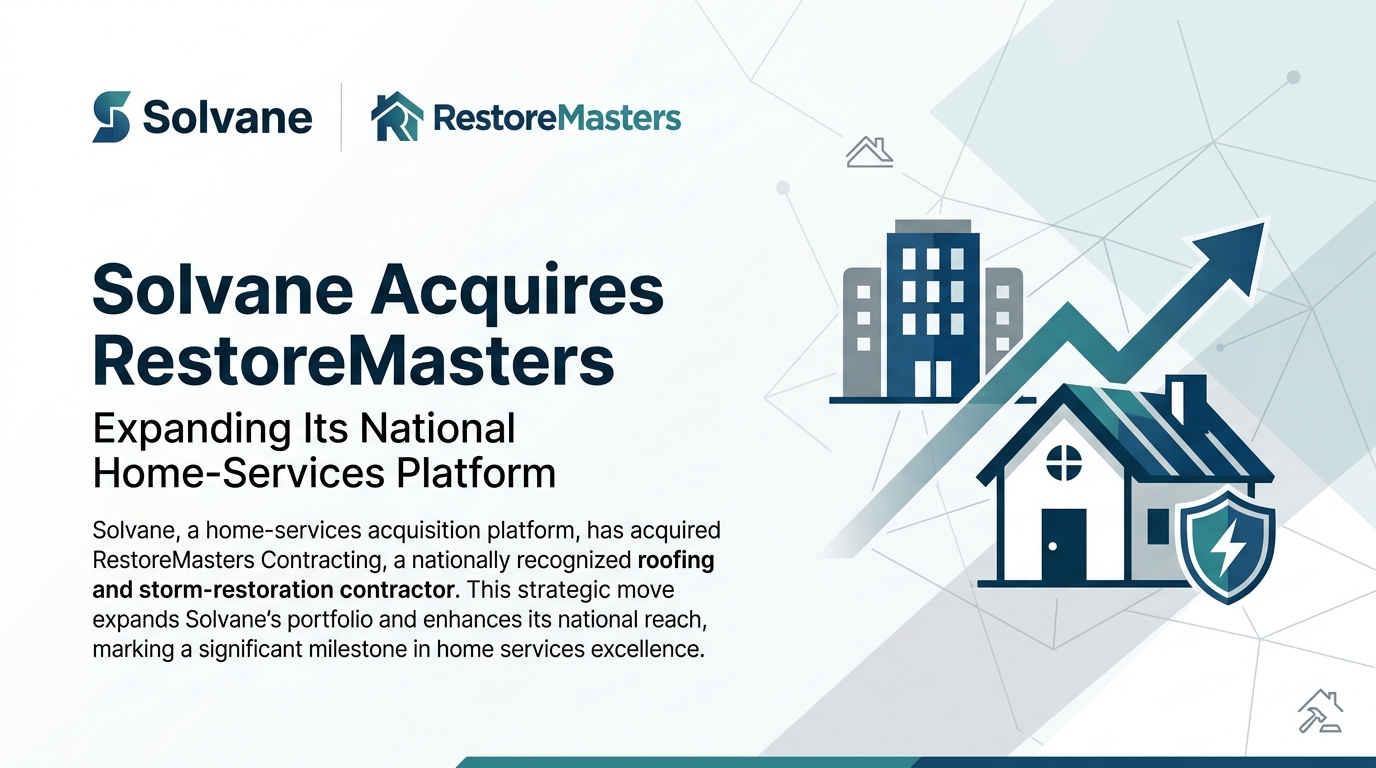
Solvane, a home-services acquisition platform, just acquired RestoreMasters Contracting, a nationally recognized roofing and storm-restoration contractor. RestoreMasters brings impressive credentials: three-time Top 100 roofing contractor and six-time Inc. 5000 honoree with 1,853% three-year revenue growth. This deal is the latest signal of private equity consolidation in the roofing and restoration space, and it reveals exactly what buyers value when they write checks.
Key Points:
- RestoreMasters achieved 1,853% three-year revenue growth and made Inc. 5000 six times
- Solvane’s platform now includes sixteen brands across roofing, restoration, plumbing, environmental testing, and staffing
- PE buyers are consolidating intellectual property, shared infrastructure, and proven operators—not just revenue
- RestoreMasters’ leadership stays on to leverage Solvane’s platform for accelerated growth
Why it matters: Whether you’re thinking about an exit in 5 years or 15, this deal shows what buyers pay for: proven operators with scalable systems, documented IP (processes, training, playbooks), and national footprint or multi-market presence. They’re not buying a job for the owner—they’re buying a business that runs without the owner. If you’re building toward a sale or just want to build a more valuable company, focus on systems, documentation, and reducing your own dependency in operations. That’s what gets valued at the table.
🔥 Trending
-
AI Receptionists for Lead Capture: AgentZap serves 2,500+ businesses with AI that answers calls, captures leads, and schedules appointments 24/7 without full-time reception staff—critical during storm season when every missed call is a lost $15K job
-
Carlisle Margin Compression: Commercial roofing manufacturer Carlisle saw operating margins compress from 19.9% to 16.8% as MDI supply disruptions and petrochemical costs rise faster than price increases—an early warning for residential contractors watching their own supply chain
-
Global Roofing Membrane Market Volatility: The commercial membrane market is projected to grow 4-6% annually, but petrochemical feedstock volatility swings 15-25% year over year—contractors need to build buffer into estimates and update costs frequently
-
Skyline Roofing CFO Appointment: PE-backed Skyline Roofing Partners hired Harry MacIntyre as CFO, signaling continued consolidation and financial sophistication in scaled roofing platforms
⚡ Quick Hits
🎯 Netic Founder on Competition: Focus Inward, Not Outward
Melisa Tokmak, founder of Netic (a $43M-funded automation platform for essential-services businesses), says she’s aware of competitors but doesn’t obsess over them. Her strategy: perfect your product and deeply understand your customers. For roofing contractors, this translates directly—stop worrying about what the guy down the street is charging and focus on building better systems, delivering better customer experience, and following up faster. That’s what wins. (Read more)
🎯 Owens Corning Valuation Split as Takeover Interest Builds
Owens Corning is seeing takeover interest from Carlisle Companies, with the stock up 66% over five years but showing mixed valuation signals. DCF analysis suggests 11.5% overvaluation, while P/S multiples suggest undervaluation versus industry peers. For contractors, this is market intelligence: consolidation among manufacturers could affect product availability, pricing power, and distributor relationships downstream. (Read more)
🎯 Commercial Roof Retrofit ROI for Industrial Buildings
Eric Schultz of Borsche Roofing Professionals breaks down why roof retrofitting delivers strong ROI for industrial buildings—installing new systems over existing structures reduces labor, downtime, and costs while improving energy efficiency and extending roof life. While this is commercial-focused, the principles apply to residential retrofit conversations around insulation, ventilation, and energy performance. (Read more)
🎓 Industry Insight
Pricing in a Volatile Material Market: How to Protect Your Margins
The 73% MDI price spike and ongoing petrochemical volatility aren’t one-time events—they’re the new normal. When upstream costs swing 15-25% annually, contractors who don’t update their pricing frequently are either leaving money on the table or losing it on every job. Here’s how to protect your margins without losing jobs.
First, shorten your material pricing window. If you’re quoting jobs with material costs locked in from 30+ days ago, you’re operating on outdated data. Update your material costs weekly during volatile periods, and communicate this to customers upfront: “Material costs are updated weekly based on current supplier pricing. Your estimate reflects today’s costs and is valid for 14 days.” This sets expectations and protects you from cost creep.
Second, build buffer into your estimates—but do it strategically. A flat 10% buffer across all material line items is lazy and gets caught in competitive bids. Instead, apply higher buffers (15-20%) to volatile materials like underlayment, adhesives, and specialty products, and lower buffers (5-8%) to stable commodities like shingles and fasteners. This keeps your total estimate competitive while protecting you where it matters.
Third, tie payment schedules to material delivery, not project milestones. If you’re collecting 50% upfront and 50% on completion, you’re financing material cost increases out of your margin. Instead, structure payments as: deposit on contract signing, material payment on delivery to job site, progress payment at dry-in, final payment on completion. This keeps cash flow aligned with cost exposure and reduces your risk if material prices spike mid-project.
❓ Question of the Day
How often do you update material costs in your estimates?
- A) Weekly or more often
- B) Monthly
- C) Quarterly or less often
- D) Only when suppliers notify me of changes
👋 Wrap Up
This week’s theme is clear: the cost environment is volatile, the tools to handle it are getting better, and the buyers watching the industry value systems over hustle. Whether it’s updating your material pricing weekly, deploying an AI receptionist to capture every lead, or building fractional sales capacity to reduce your own dependency, the operators who win are the ones who build systems that work when they’re not in the room.
Private equity is consolidating proven operators with scalable IP and documented processes. That’s not just acquisition intelligence—it’s a blueprint for building a more valuable business whether you sell or not. Focus inward. Build better systems. Serve your customers relentlessly. The rest takes care of itself.
Stay sharp,
Shareef Huddle
📊 How did you like today’s email?
Enjoyed this issue?
Subscribe to get The Ridge Insights delivered to your inbox every week.
Join 95 other subscribers • Free forever